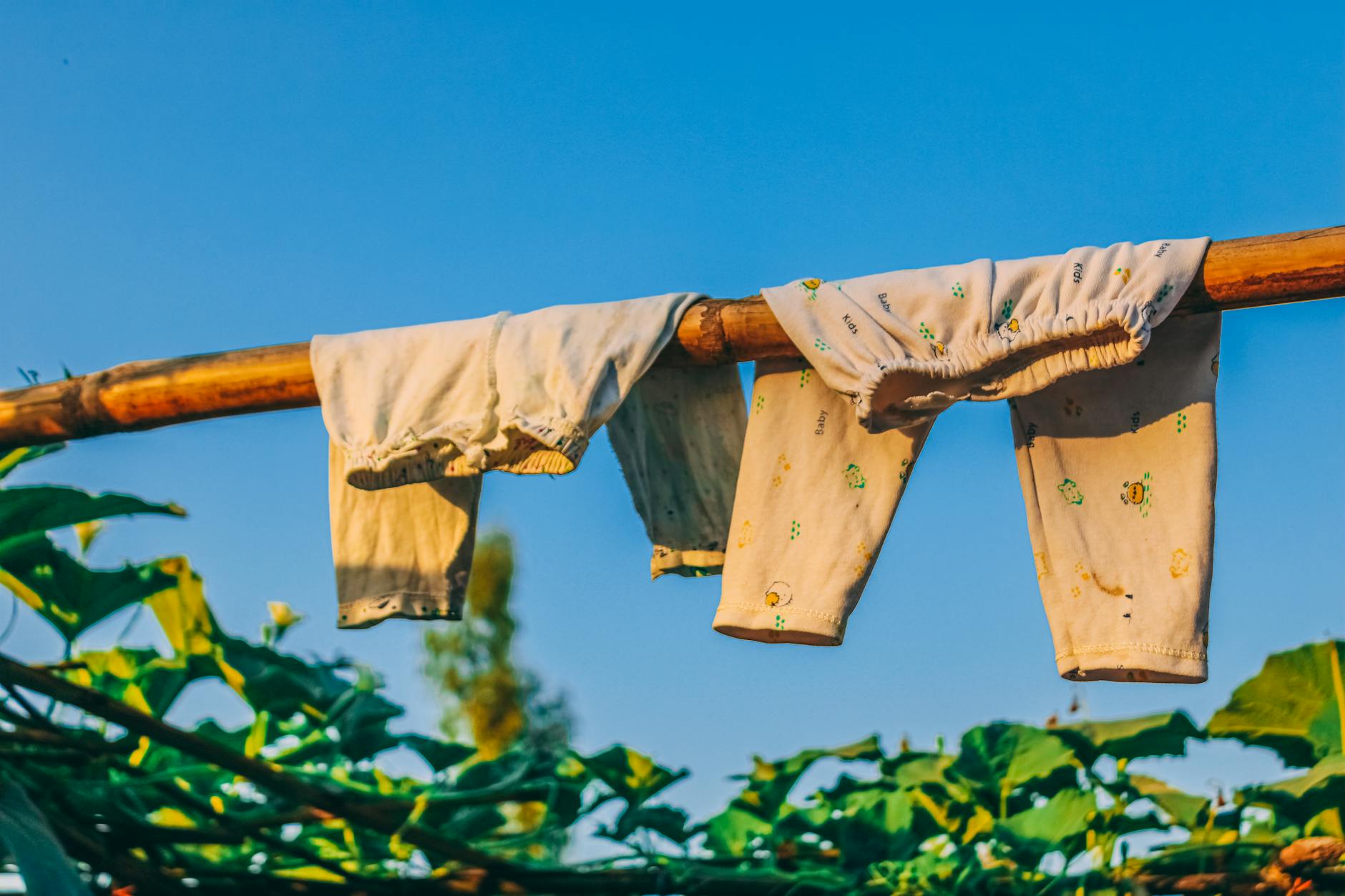
Air-dry clothes when the fabric is delicate, elastic, wool, silk, or fitted, when a garment has a print, coating, or embellishment, when it is a new cotton item likely to shrink, or when the dryer is overloaded or slow. Use the dryer for towels, sheets, jeans, and sturdy cotton basics where heat and tumbling do little harm. Most households do best with a mix of the two.
The decision comes down to what you are trying to protect: fit, color, elastic, or time. This guide lists the situations where air drying pays off, shows how to do it well so clothes do not come out stiff or musty, and covers the cost and time trade-offs.
What the dryer actually does to clothes
A dryer combines three things: heat, tumbling, and airflow. Each has an effect.
- Heat shrinks natural fibers such as cotton and wool, damages elastic, and can set wrinkles.
- Tumbling creates friction that thins fabric, pills knits, and breaks threads. The lint in your trap is made of fibers rubbed off your clothes.
- Over-drying makes fabric stiff and brittle, increases static, and makes wrinkles harder to remove.
Moderate use is fine for many items. It is cumulative damage over many cycles, not one load, that wears clothes out.
Air dry these
Elastic and stretch fabrics
Bras, swimsuits, leggings, shapewear, and athletic wear contain spandex or elastane. High heat makes the elastic brittle and baggy. Hang or lay these flat.
Wool, cashmere, and silk
These are the highest-risk fabrics. Heat and agitation make wool felt and shrink permanently, and silk can lose its sheen. Lay sweaters flat on a towel, reshape while damp, and keep silk on a hanger away from direct sun.
Knits
Even cotton and synthetic knits can stretch when they hang wet on a hanger. Dry sweaters and other heavy knits flat. Dry lighter knit tees on a hanger or rack.
Printed, coated, or decorated items
Screen prints, transfers, sequins, patches, and rubber-backed fabrics can crack, peel, or melt under heat. Turn them inside out and hang them.
New or shrink-prone cotton
Cotton shrinks the most during the first few washes. If a fitted cotton shirt or pair of raw jeans matters to you, air dry the first few cycles to keep the size stable.
Anything with a “line dry” or “dry flat” label
Follow it. Manufacturers add these labels because they have tested the fabric.
For a longer breakdown by garment, see what clothes should never go in the dryer.
Use the dryer for these
- Towels and washcloths. The tumbling fluffs the loops. Air dried towels often feel stiff.
- Bed sheets and pillowcases. They dry quickly in the dryer and come out smoother.
- Jeans and work pants. Medium heat is fine, and removing them slightly damp helps prevent over-drying.
- Cotton T-shirts, underwear, and socks. These can handle medium or low heat.
- Bulky items. Comforters and large blankets can be hard to air dry, and the dryer is often the only way to dry them fully. Use low heat, add a few dryer balls, and check that the inside is completely dry to avoid mildew.
How to air dry well
Good technique avoids the stiff, damp, or stretched results people dislike.
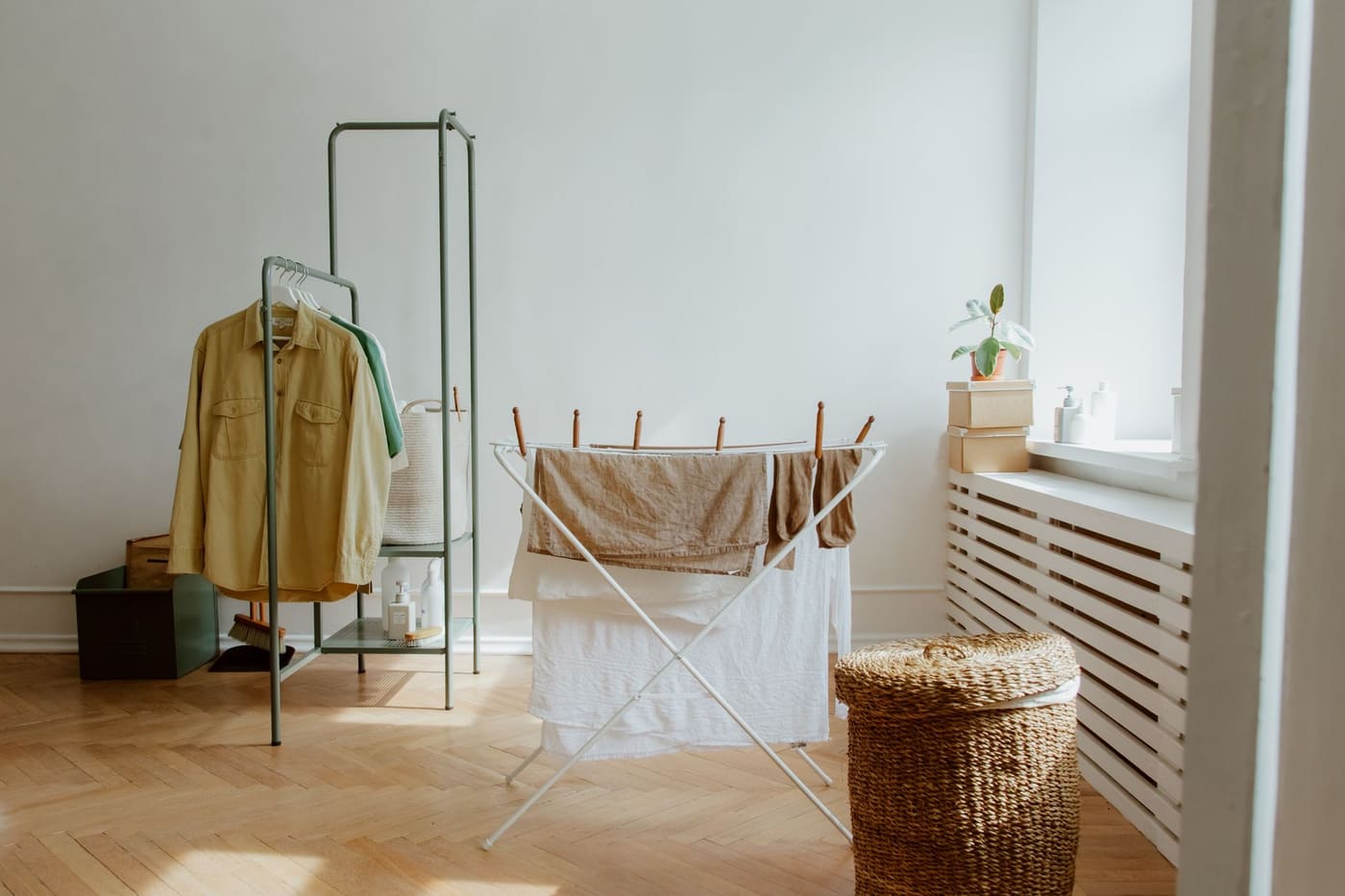
- Wring gently or use the spin. Use a high spin on sturdy items and a low spin on delicates. Roll very wet delicates in a clean towel and press, rather than twisting.
- Shake and smooth. Give each piece a firm shake and straighten seams and collars. This reduces wrinkles.
- Pick the right method. Hang shirts and dresses on padded or plastic hangers, drape pants over a rack bar, and lay sweaters flat.
- Leave space. Allow air to move around each piece. Clothes packed tightly take longer to dry and can develop a damp smell.
- Pick a good spot. A room with open windows, a fan, or a dehumidifier speeds drying. Outside, a shaded breezy spot works well for dark or delicate items, since sun can fade dyes. Direct sun is generally fine for white cotton.
- Check for dryness. Pay attention to thick seams, waistbands, and pockets, which stay damp longest.
How long it takes
Drying time depends on fabric, humidity, and airflow. Light synthetics and athletic wear dry fastest, cotton T-shirts and jeans take much longer, and towels and other heavy items can take longer still. Humid rooms add hours, and a fan or dehumidifier can cut that time. Plan on a few hours at minimum for most cotton, and check thick seams before putting things away.
Avoid the problems of indoor drying
Drying clothes indoors adds moisture to the air. A few precautions help:
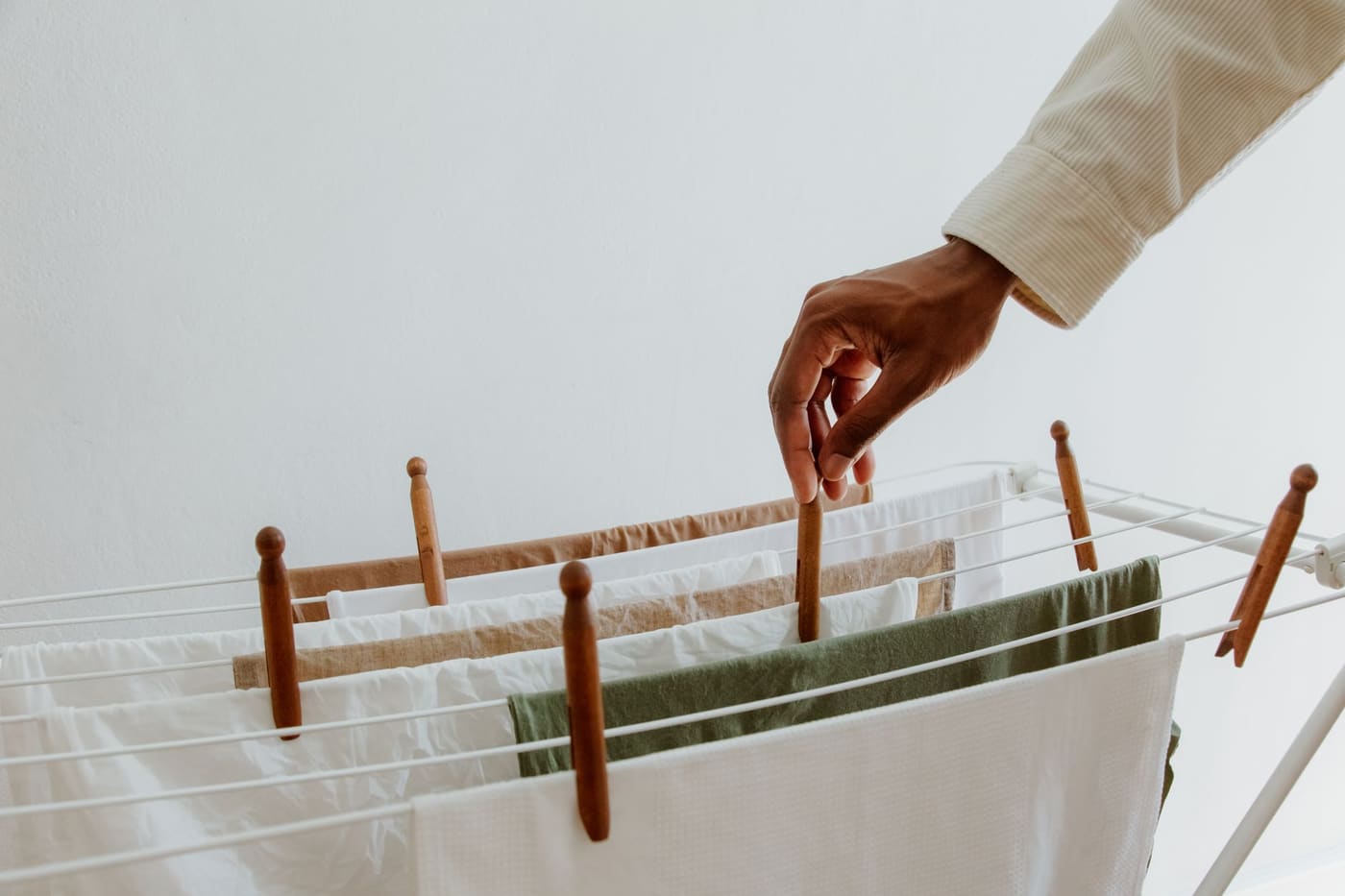
- Keep the room ventilated, with a window open or an exhaust fan or dehumidifier running.
- Do not leave wet clothes in a closed room or closet. Damp laundry that dries slowly can grow mildew and smell sour.
- Avoid placing wet items directly against walls or on radiators in a way that could damage the surface, and keep drying racks and clothing away from heaters and open flames.
- Do not leave damp clothes bundled together in a basket.
If clothes dry stiff, a short 5 to 10 minutes of tumbling on low or no heat can soften them. If they smell musty, rewash them and dry faster next time. Why clothes still smell bad after washing goes through the main causes.
Compare air drying with machine drying
| Factor | Air drying | Machine drying |
|---|---|---|
| Fabric wear | Low | Higher over many cycles |
| Shrinkage risk | Very low | Moderate to high on natural fibers |
| Time | Hours | Usually under a couple of hours, varies by machine |
| Energy cost | Near zero | A real but modest cost per load, varies with local rates |
| Space | Needs a rack or line | Uses existing appliance |
| Softness | Can be stiffer | Softer, especially towels |
| Wrinkles | Can be fewer on hanging items | Can set wrinkles if left sitting |
Dryer running costs vary with local energy rates and with whether the dryer is electric or gas, so check your own utility bill. Moving some loads to a rack means less dryer use, which also reduces wear on the machine. A folding rack is the simplest equipment, and a retractable line or ceiling-mounted rack is a step up.
Combine methods
A practical middle route is a hybrid approach.
- Dry towels, sheets, and sturdy cottons in the machine.
- Hang delicate and quick-drying pieces on a rack while the dryer runs.
- Use the dryer for a few minutes to finish partly dried jeans or shirts, which reduces stiffness and wrinkles.
- Keep the lint trap clear and the vent clean so the dryer works efficiently when you do use it, as covered in how to keep a washer and dryer working better for longer.
If you are managing a large household, a rack or two can relieve pressure on the dryer. What laundry system works best for a busy household shows how this fits into a routine. And for broader habits that preserve clothing, read how to make clothes last longer in the wash.
Quick decision rules
If you do not want to think about each garment, use these rules.
- If the label says line dry or dry flat, hang or lay it flat.
- If the item stretches, such as leggings, bras, or swimwear, hang it.
- If it is wool, silk, or a heavy knit, dry it flat.
- If it is new cotton and fit matters, hang it for the first few washes.
- If it is a towel, sheet, or sturdy everyday cotton, use the dryer on low or medium.
- If the dryer is full or running slowly, move quick-drying items to the rack.
A garment that has shrunk in the dryer rarely returns to its original size, so when you are unsure, air drying is the safer choice. The care label symbol guide explains the line dry and dry flat symbols.
Where this comes from
This guide is based on standard care-label conventions (line dry, dry flat, and the tumble-dry heat symbols), general textile knowledge about heat, tumbling and fibers such as wool and spandex, and common home-ventilation practice for indoor drying. Drying times and energy costs depend heavily on your fabrics, room and local rates, so they are described generally here. Check your own utility rates and your garment labels.