Never put these in a hot dryer: bras and anything with underwire or molded cups, wool and cashmere, silk, lace and delicate knits, spandex-heavy activewear and shapewear, items with rubber or vinyl prints and iron-on patches, rubber-backed mats, foam-lined items, and anything labeled “do not tumble dry” or “line dry.” Heat shrinks natural fibers, melts or cracks synthetic finishes, and breaks down elastic.
Many of these items will survive one trip to the dryer, which is why people do it. The damage is cumulative, so the garment fits a bit worse each time until it looks tired or no longer holds its shape. This guide sorts the risky items by what the dryer does to them and tells you what to do instead.
Read the care label first
The label inside the garment is the manufacturer’s instruction, and it is the quickest way to decide. The tumble dry symbol is a square with a circle inside. Learn these variations:
- Circle with dots. One dot means low heat, two dots means medium, three dots means high.
- Circle with a filled-in center. No heat, tumble dry only (air fluff).
- Circle in a square with a cross through it. Do not tumble dry.
- Square with a curved line at the top, or a horizontal line inside. Line dry or dry flat, depending on the symbol.
An empty circle means any heat is acceptable, and lines under the symbol point to the cycle (none for normal, one for permanent press, two for gentle). If the label is cut out or unreadable, treat the fabric type as your guide. Fiber content is usually printed on a separate tag. The care label symbol guide shows the full set.
Delicates and intimates
Bras
Bras are at the top of the list. The dryer’s heat degrades the elastic in the band and straps, which is what gives a bra its support, and tumbling can bend or pop out underwires and warp molded cups. Hand wash or use a gentle cycle in a mesh bag, then hang or lay flat to dry.
Lace, hosiery, and lingerie
Fine knits and open weaves snag easily on drum holes, zippers, and other items. Tights and stockings lose their stretch. Air dry these on a rack.
Shapewear and swimwear
These are made of spandex (also called elastane or Lycra) blends. Spandex tolerates only mild heat. Repeated high heat makes it brittle and baggy, so swimsuits and shapewear lose their snap. Rinse swimwear in cool water and hang it in the shade.
Natural fibers that shrink or distort
Wool and cashmere
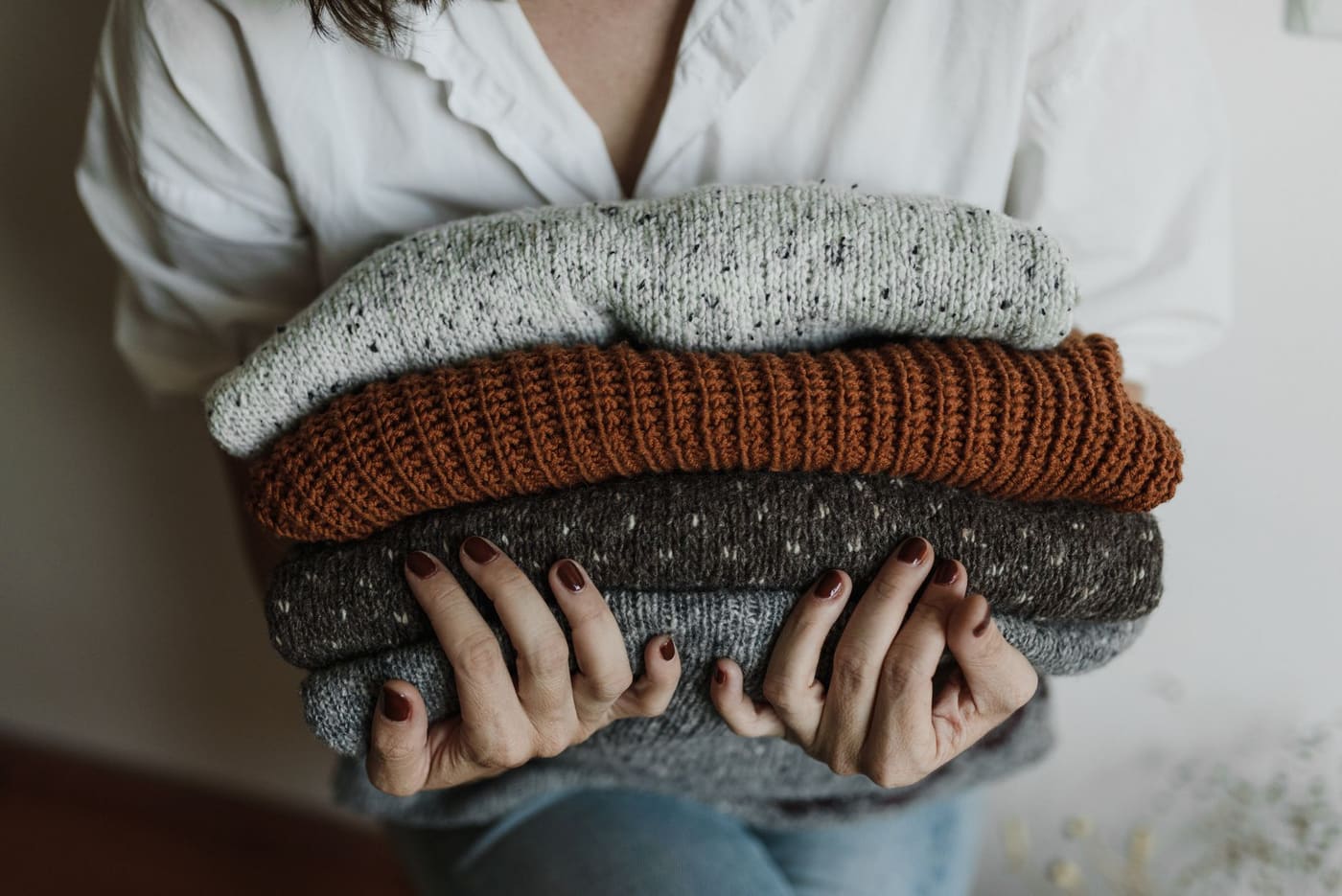
Wool fibers have tiny scales that lock together under heat, moisture, and agitation. This is called felting, and it is permanent. A wool sweater that shrinks in the dryer will not recover. Lay wool items flat on a towel, reshaping them while damp, and let them dry at room temperature.
Silk
Silk loses its sheen, can shrink, and can develop water marks when machine dried. Hang or lay flat. If the label says dry clean only, follow it.
Rayon, viscose, and some linen
Rayon and viscose weaken when wet and shrink under heat. Linen is more forgiving but wrinkles and can shrink. Check the label and lean toward air drying or low heat with early removal.
Cotton knits, new jeans, and fitted tees
Cotton generally tolerates the dryer, but it shrinks most the first few times. New items, especially 100 percent cotton T-shirts, can shrink noticeably in the first hot wash and dry. Raw denim and rigid jeans may shrink in length. If you want a stable fit, dry cotton on low heat and remove while still slightly damp.
Items with coatings, prints, and adhesives
Some garments have a surface layer that melts, peels, or cracks.
- Screen prints and heat transfers. Plastic-based graphics crack and peel when exposed to repeated high heat. Turn the garment inside out and dry on low, or hang it.
- Iron-on patches and appliques. Heat softens the adhesive, so patches lift at the edges.
- Rubber or latex backing. Bath mats and non-slip rugs have rubber that can crumble and leave residue in the drum. Check the label and air dry.
- Waterproof and performance outerwear. Many have membranes or coatings. Some can go in low heat to reactivate water-repellent treatments, but the label should say so. Otherwise, hang to dry.
- Foam, padding, and molded items. Foam-lined hats, padded bras, and memory-foam pillows can deteriorate, crumble, or get stuck in the drum.
- Sequins, beads, and embellishments. They snag, detach, or melt. Hang dry.
Items that are a fire risk, not just a fabric risk
A few things should stay out of the dryer for safety, not to protect the garment. Dryer manufacturers’ owner’s manuals say the same things consistently:
- Items spotted or soaked with cooking oil or vegetable oil. Residual oil can oxidize and generate heat, and even washed items may still hold enough oil to ignite. Hang them to dry instead.
- Items cleaned with, soaked in, or spotted with gasoline, solvents, or other flammable liquids. Their vapors can ignite. This includes some spot removers and waxes. Air them outdoors until the smell is gone and wash them more than once before any heat.
- Foam rubber (sometimes labeled latex foam) or similar rubber-like materials. Do not dry these on a heat setting.
Beyond these, a clogged lint screen or vent adds to the fire risk for every load, which is covered in keeping a washer and dryer working well. Your own dryer manual lists its specific warnings.
Athletic and performance wear
Moisture-wicking shirts, leggings, and compression gear are made of polyester, nylon, and spandex. High heat can damage the stretch and leave the fabric holding odor. Dry on low or hang, and skip fabric softener, which coats the fibers and reduces wicking. Thin synthetics also tend to dry quickly on a rack.
Comparison of common items
| Item | Dryer risk | Better method |
|---|---|---|
| Bras and underwire items | Warped cups, ruined elastic | Hang or lay flat |
| Wool and cashmere sweaters | Permanent shrinkage and felting | Dry flat on a towel |
| Silk | Dulling, shrinkage | Hang to dry |
| Spandex activewear, swimsuits | Lost stretch, brittle fibers | Hang or low heat briefly |
| Graphic tees with prints | Cracking, peeling | Inside out on low, or hang |
| Rubber-backed mats | Crumbling backing, residue | Air dry |
| Lace and delicate knits | Snags, stretching | Dry flat |
| Down or fiber-filled items | Fine in low heat with dryer balls | Check the label |
Items that can go in the dryer if you are careful
Not everything on the list is off limits.
- Cotton T-shirts, towels, and bedding do fine on medium heat.
- Down jackets and comforters often need the dryer to restore loft. Use low heat and a few clean tennis balls or wool dryer balls to break up clumps, and check that the item is completely dry to prevent mildew.
- Jeans can go on medium, though turning them inside out and removing them slightly damp reduces fading and wear.
How to dry the risky stuff without a dryer
Air drying works for almost all of these items, and it takes little equipment.
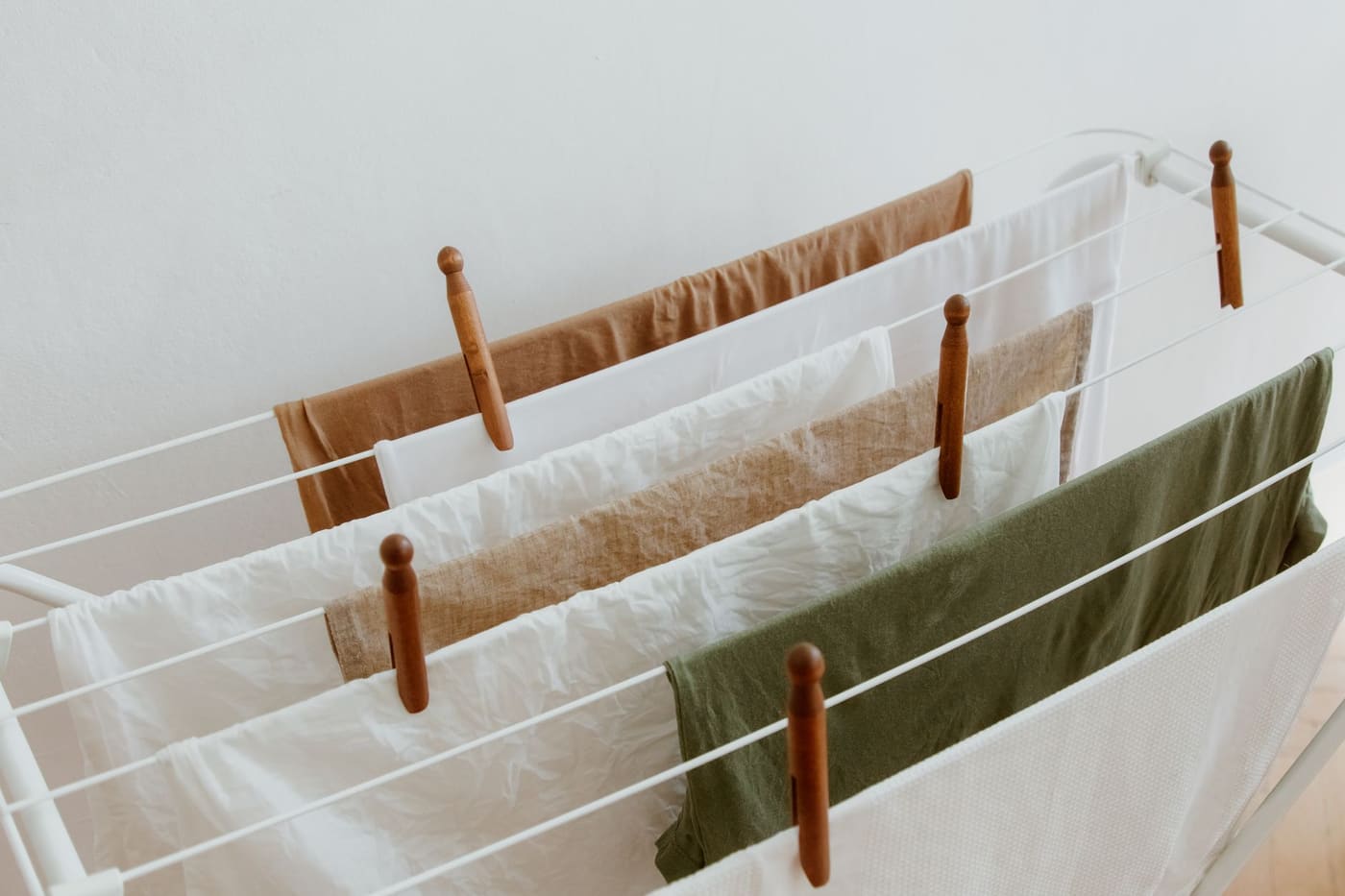
- A folding drying rack. A standard one holds a good part of a load of laundry.
- A mesh flat-drying rack. This suits sweaters, which should dry flat to avoid stretching at the shoulders.
- Padded or plastic hangers. Use these for blouses and dresses, and avoid wire hangers that leave marks.
- A towel. Roll a wet sweater in a dry towel and press, which pulls out water without wringing.
Keep items out of direct sunlight if they are dark or silk, since sun fades dye. Allow airflow around each piece, and expect thicker cotton items to take many hours, depending on thickness, humidity, and temperature. For tips on timing and deciding what to hang, see when to air dry clothes instead of using the dryer.
If you are unsure
Dry the item on the lowest heat or air-fluff setting for about 10 minutes, check it, and finish drying on a rack. That gives you some of the wrinkle benefit without the worst of the shrinkage, though a label that says not to tumble dry always wins. A dirty lint screen or clogged vent makes a dryer run hotter than its setting suggests.
The broader pattern is covered in how to make clothes last longer in the wash, and if clothes seem worn out too soon, why clothes wear out faster than they should lists other habits to check.
Where this comes from
This guide is based on standard care-label symbols (the dot system for heat levels, the crossed-out symbol for no tumble drying), the safety sections of dryer manufacturers’ owner’s manuals (cooking oil, flammable liquids, foam rubber), and the U.S. Consumer Product Safety Commission’s lint and vent guidance. Fiber behavior such as wool felting and spandex heat damage is general textile knowledge. Prices change and are left out, and your garment’s own label and dryer manual take precedence.