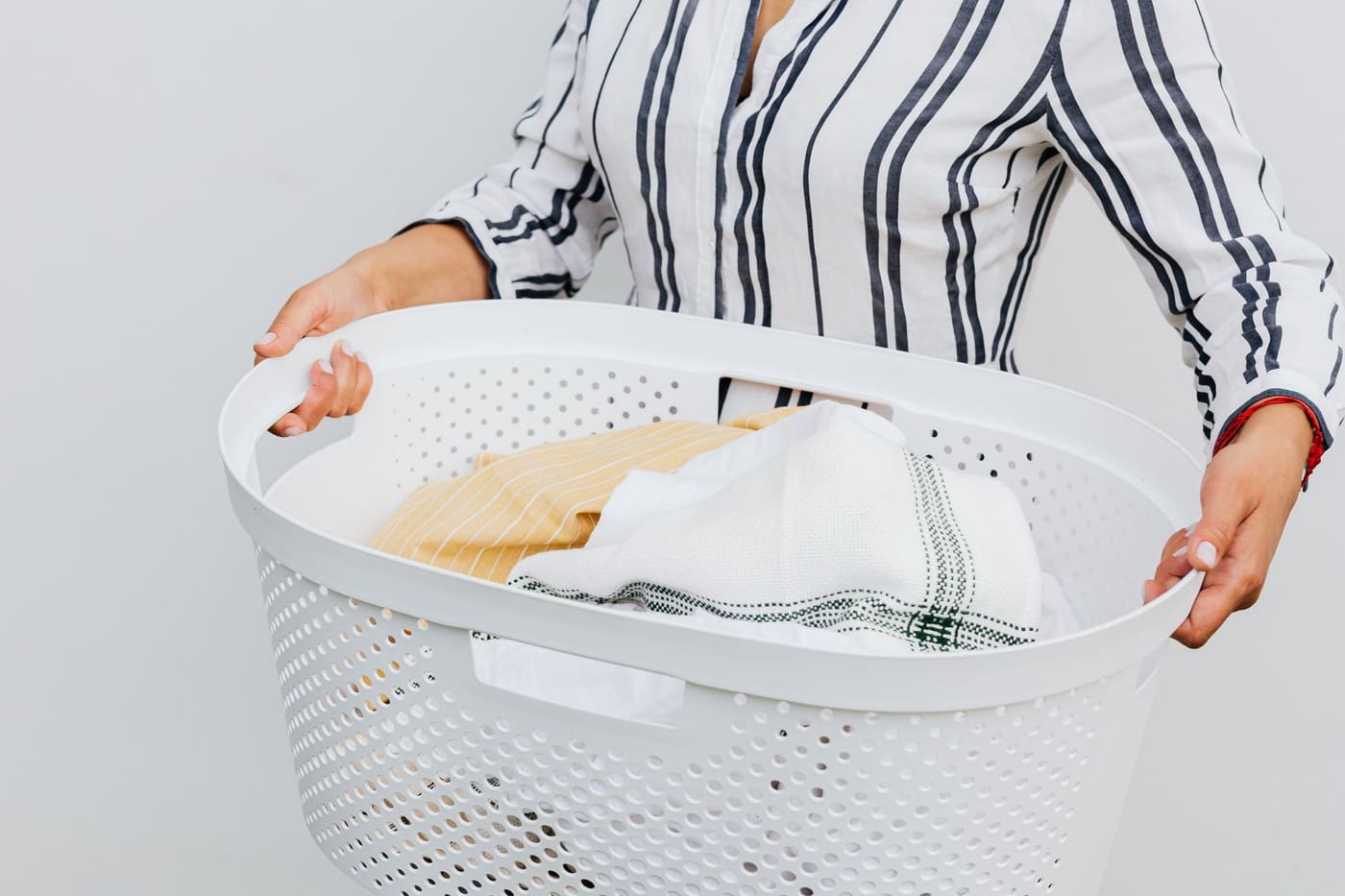
The best laundry system for a busy household is usually one small load a day, or one load per person per week, with every load carried from wash to put-away on the same day. It beats a single marathon wash day for most families because nothing gets big enough to feel impossible and a missed day costs little. The right choice still depends on household size, how many people can help, and whether you have a dryer or rely on racks.
This guide compares the four most common systems, shows how to pick one from your actual numbers, and explains how to fix the points where routines usually fail.
Start with where your routine breaks
Before choosing a system, notice where laundry stalls. For most households it is not washing. It is one of these:
- Waiting for a full load. Dirty clothes sit until someone has time, and then there are six loads.
- Clean-clothes limbo. Dry clothes sit in a basket, on the bed, or in the dryer for days.
- Sorting friction. There is no place to sort, so everything is mixed and has to be separated at the machine.
- One person doing everything. When that person is busy, the whole system stops.
- Too much folding. Expecting every item to be neatly folded makes the last step the hardest.
Write down which of these applies to you. The system you pick should fix that specific problem.
Count your actual volume
A quick estimate helps. As a rough planning figure, plan on around one to two loads per person per week, and more for families with young kids, sports, or work uniforms. Add bedding and towels. These are estimates, not measured data, so count your own loads for a week.
| Household | Rough loads per week | Natural fit |
|---|---|---|
| 1 to 2 adults | 2 to 5 | Wash day or small loads every other day |
| Family of 3 to 4 | 6 to 10 | One daily load, or two heavier days |
| Family of 5 or more | 10 to 15+ | Daily loads, shared across people |
Also count how many loads your machines can complete. Cycle times vary by machine and load, so time yours once: a washer and a dryer each often run somewhere from half an hour to over an hour. If the dryer is the bottleneck, add a drying rack for some items. The laundry load planner can help with the arithmetic.
Four systems compared
1. One big wash day
Everything is washed in one block, often on a weekend. It suits small households and people with a long free window.
- Pros: Easy to plan, everything is done at once, and you can do it while at home.
- Cons: It takes hours, one skipped week doubles the work, and a full hamper may run out of socks and underwear mid-week.
2. Daily micro-load
You run one load a day, usually starting it in the morning and moving it to the dryer in the evening. It suits large households and people who work at home or have predictable evenings.
- Pros: No big piles, easy to restart after a miss, and the work is small enough to do between other tasks.
- Cons: It requires a consistent habit, and the machines are running most days.
3. Person-based baskets
Each person has their own basket and a wash day, such as Monday for one child, Tuesday for another. Older kids can do their own. It suits households with several people who can handle their own clothing.
- Pros: Shares the work and removes sorting after the dryer.
- Cons: Smaller loads may waste water and energy, and it takes coordination.
4. Category loads
You wash by type: towels on one day, sheets on another, school clothes, workout clothes, and so on. It suits households with a mix of heavy items and uniforms.
- Pros: Loads are naturally well sorted, towels get washed hot, and delicates get their own gentle cycle.
- Cons: If one category runs out early, you may have to run an unplanned load.
Many households end up with a mix: a daily load for clothes, with towels and sheets on set days.
Set up the physical layout
Systems only work when the space supports them.
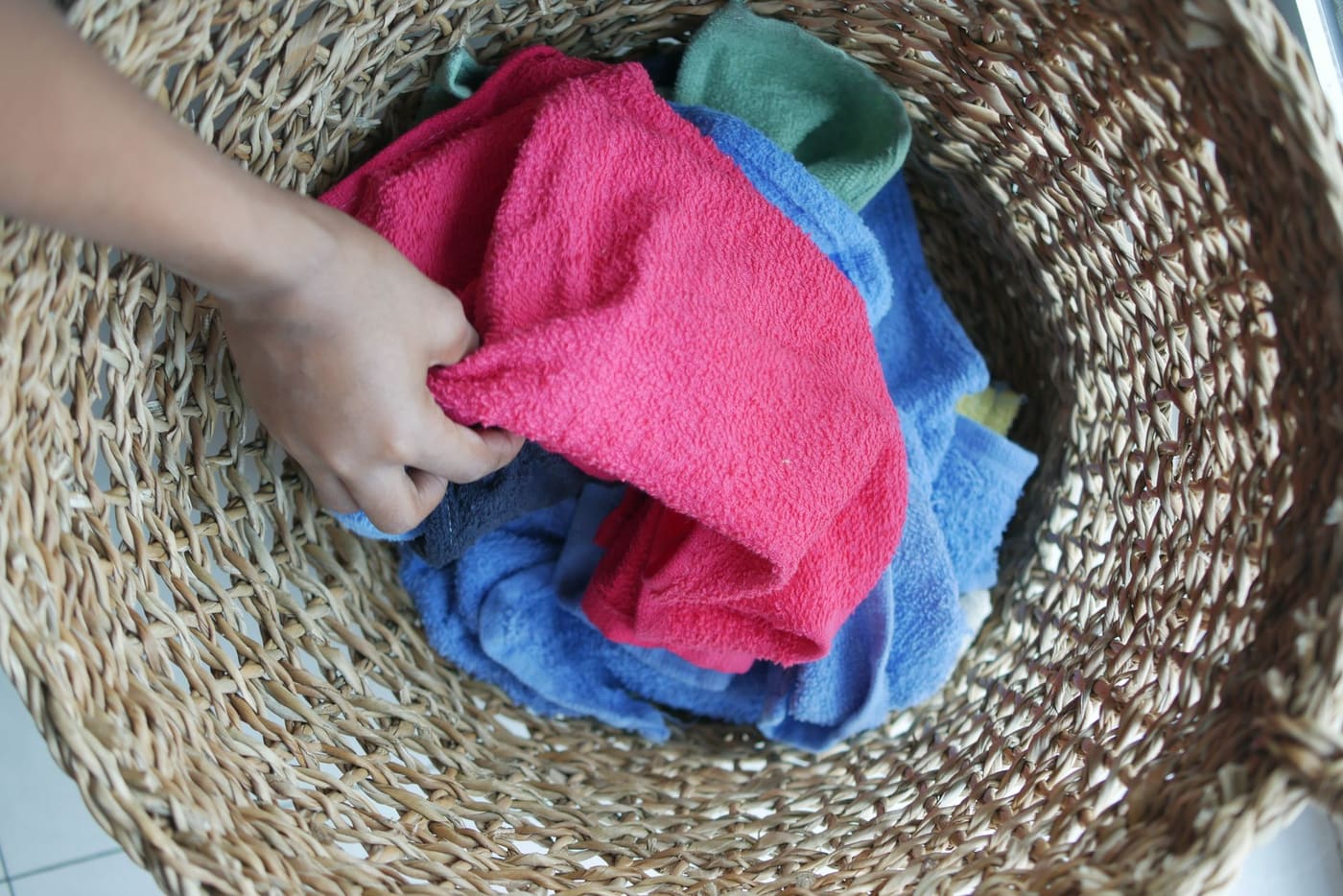
- Place hampers where clothes come off. Use one in each bedroom and one in the bathroom or hallway, with a divider or two bins for darks and lights.
- Use a basket per person for clean clothes. After folding, each person gets their basket. This removes the “who does this belong to” step.
- Keep supplies together. Detergent, stain remover, mesh bags, and dryer sheets or wool dryer balls should be within reach of the machines.
- Add a hanging rod or drying rack. A rack lets you air dry a load while the dryer handles another, and a hanging rod gets shirts onto hangers directly.
- Use a lost-sock basket. Keep one bin on the shelf and clear it monthly.
If your space is tight, a stackable laundry center or a narrow rolling hamper can help. Basic supplies are cheap, and many households already own most of them.
Make folding smaller
Folding is where routines often die. Some ways to lower the burden:
- Hang shirts straight from the dryer.
- Fold only items that need it. Underwear, socks, workout clothes, and pajamas can be placed in drawers loosely or rolled.
- Teach kids to fold their own clothes, starting with simple items such as towels and T-shirts.
- Set a time limit. Fifteen minutes with a podcast is often enough for one load.
- Give every family member a basket instead of folding to the “store” level.
For more on staging and the dry-to-drawer step, how to organize laundry so it does not pile up goes through the details.
Reduce the amount of laundry
Fewer loads means a simpler system.
- Rewear what is not dirty. Pants, sweaters, and jackets can often go several wears between washes.
- Use one towel per person per week. Hang each towel to dry fully after use.
- Use fewer sheet sets. Washing sheets weekly is common, and two sets let you swap quickly.
- Make clothing choices that dry quickly. Lightweight fabrics hang dry in a few hours.
- Cut down on the number of clothes. A smaller closet means fewer items to sort, wash, and store.
Gentler care also reduces replacement spending. How to make clothes last longer in the wash covers temperature, load size, and cycle choices that protect clothing.
Use the dryer and the rack together
If you have a dryer, use it for towels, sheets, and sturdy cottons. Hang delicate or quick-drying pieces such as athletic wear, bras, and knits on a rack. This keeps the dryer from becoming the choke point and protects clothing that does not do well with heat. When to air dry clothes instead of using the dryer gives a simple way to decide.
If you want a quick recommendation tool, the site’s laundry system chooser lets you compare options for your household.
Handle the weak points
Plan for what happens when things go wrong.
- A missed day. Do not double up. Run the next load as planned and catch up on weekends.
- A sick household member. CDC guidance for laundry from someone who is ill is to use the warmest water setting the fabric allows and dry completely, and to avoid shaking dirty laundry. Follow each care label.
- An overflowing hamper. Pull out essentials first, such as school uniforms, work clothes, and underwear.
- A broken machine. Know the nearest laundromat, and keep a few spare clothes available.
- Travel. Run a load right before you leave and empty the machine on return.
Whatever system you pick, give it a trial of two to three weeks before judging it. Habits take time to settle, and the first week usually exposes small fixes, such as a basket in the wrong place or a wash day that clashes with a regular activity. Change one thing at a time so you can tell what helped.
Where this comes from
This is practical household-management advice, not research findings. The system comparison reflects common home-organizing practice, the sick-household laundry point reflects CDC guidance on washing laundry from someone who is ill, and the care and drying points reflect standard care-label conventions. Load counts and cycle times are rough estimates that vary with the household and machines, so measure your own. Prices change, so check supplies locally.