Laundry stops piling up when you shorten the time between a dirty item and a clean, put-away item. The fix is a few easy sorting points, a small set of fixed wash days or a daily one-load habit, and a rule that every load gets moved to the next step the same day. Perfect folding is optional. Moving loads along is not.
Piles grow because the process has too many steps that each wait for a decision, a free hour, or a full basket. Below you will find where the backlog usually forms, how to build a sorting setup, and how to restart when you are already buried.
Why laundry piles up
Laundry has five stages: collect, wash, dry, fold, and put away. Most people can handle the first three because machines do the work. The pile appears at the last two, which need your hands and a block of time. A load that sits in the dryer for two days blocks the next load, which makes the dirty basket overflow, and soon you have clean clothes in a heap on the couch and nothing to wear.
Think of it like a pipeline. If one stage is slower than the stages feeding it, the line backs up. Your job is to find the slow stage and make it faster, or give it less to do.
Common bottlenecks:
- Waiting for a “full load” before starting
- Too few baskets, so there is nowhere to put sorted items
- Sorting everything into many tiny categories
- Clean clothes left in the dryer or basket “to fold later”
- Not enough drawer or closet space, which makes putting away harder than letting it sit
Set up sorting points where clothes come off
Sorting is easiest at the place where the clothes are dropped, not at the washer. Instead of one big hamper, use two or three bins or a divided hamper in a bedroom, bathroom, or hallway.
A simple structure:
- Darks and colors. Jeans, dark shirts, anything that bleeds.
- Lights and whites. T-shirts, underwear, socks, sheets.
- Towels and heavy items. These are washed hot and take longer to dry.
- Delicates (optional). A mesh bag hung on a hook for bras and anything that needs a gentle cycle.
Fewer categories are better. Two bins is a good start for one or two people, and four is plenty for a family. Use a dedicated hamper for each bedroom if kids or teens are old enough to carry their own, and let them wash their own loads once they are able.
A basket that is too big hides the problem. A smaller hamper, around one to one and a half loads of clothing, tells you when it is time to wash.
Pick a rhythm that matches your volume
How often you wash should depend on how much laundry your household makes. These are rough estimates, not measured figures, so count your own loads for a week to see where you fall:
| Household | Typical laundry volume | Rhythm that often works |
|---|---|---|
| One person | 2 to 3 loads a week | One wash day, or one small load every other day |
| Couple | 4 to 6 loads a week | Two or three wash days |
| Family with kids | 7 to 12 loads a week | One load a day, with a heavier day for bedding and towels |
Wash day versus daily load
A single wash day concentrates the work. It suits people with a free weekend morning and a drying rack or enough dryer capacity. The risk is that missing one week doubles the pile.
A daily load, or starting a wash on a regular schedule such as every morning before work, spreads the effort. It suits large households. The advantage is that nothing gets big enough to feel overwhelming, and one missed day is a small gap. The washer is running while you do something else, and you move it to the dryer at a natural break, such as when you get home or at dinner.
If you are still deciding, what laundry system works best for a busy household compares the main options side by side, and the laundry load planner can help you estimate your weekly volume.
Shrink the gap between dry and put away
This is the step that matters most. A few tactics that work:

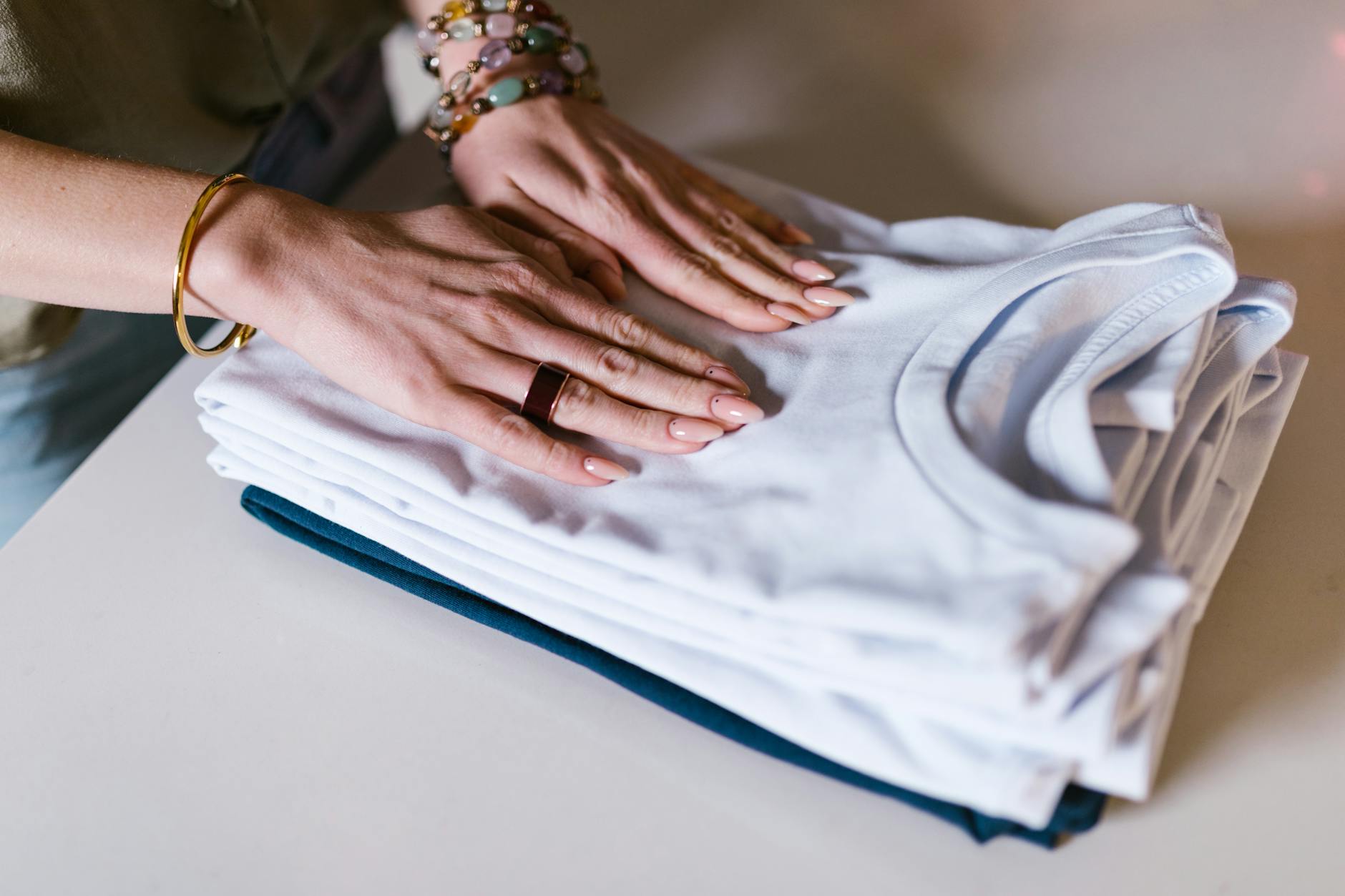
- Fold as you take items out. Stand at the dryer, grab the hot items, and fold them right there into a basket or on the machine top. Items folded straight from the dryer have fewer wrinkles.
- Fold only what needs folding. Underwear, socks, and T-shirts can be tossed or stacked into drawers. Fold shirts that would wrinkle and hang what needs hanging.
- Use one pass per person. Sort clean clothes into separate baskets, one for each person, and deliver the basket to the bedroom. The person puts their own away.
- Set a timer. Folding one load often takes a quarter of an hour or less. Pair it with a TV show, a call, or a podcast.
- Use the dryer buzzer as the cue. When the dryer ends, the next step starts. Do not wait for “later.”
Hanging clothes straight from the dryer on hangers saves time on shirts, pants, and dresses, and it removes the need to fold them at all.
Make putting away easier
If drawers are crammed, putting away feels like a chore. Cutting down on clothes you do not wear helps more than any basket system. Go through drawers every season and pull out items that do not fit or that you have not worn in a year. Donating them cuts the amount that needs washing, folding, and storing.
Other ways to cut friction:
- Keep a hamper and a donation bag in the closet so you can get rid of items as you notice them.
- Use vertical folding in drawers so you can see everything without digging.
- Store socks and underwear near where you get dressed.
- Keep enough hangers, since a missing hanger is one more reason to leave a shirt in the basket.
How to reset when you are buried
If the pile is already large, do not try to fix everything at once.
- Pull out what you need this week. Sort out a few days of outfits, underwear, and socks, and wash that first.
- Set a daily load target. One or two loads a day works through a pile of 15 to 20 loads in a few weeks, and fewer if you do both on weekends.
- Handle clean clothes in the same pass. Do not let wash-dry-fold run on different days.
- Wash by volume, not by perfection. Mixed colors in cold water are fine for a reset, with the exception of new dark items and bright reds, which can bleed. Check care labels for items that need special handling.
- Run towels and sheets last. They take the longest and can wait.
Also check that your machines are not the bottleneck. A dryer that needs two cycles for a load doubles your time, and keeping a washer and dryer working better for longer explains how to fix slow drying. If your dryer is overloaded or drying slowly, when to air dry clothes instead of using the dryer can also relieve pressure on the machine, since a rack can handle some items while the dryer handles the rest.
Adjust the step that keeps failing
If you miss a few days, begin again with the next dirty load instead of trying to catch up on everything. Then change the one step that keeps stalling: if folding keeps failing, fold less; if sorting keeps failing, use fewer bins; if weekdays are too busy, move wash days to the weekend or start a load before work. A short note near the machines saying who does which step helps everyone in the household follow the same routine.
Where this comes from
This article is practical household organizing advice rather than research findings. It rests on the common five-stage view of laundry (collect, wash, dry, fold, put away), the care-label and machine-capacity basics covered elsewhere on this site, and general home-organizing practice. Load counts and times are rough estimates that depend on the household, so measure your own for a week before choosing a rhythm.