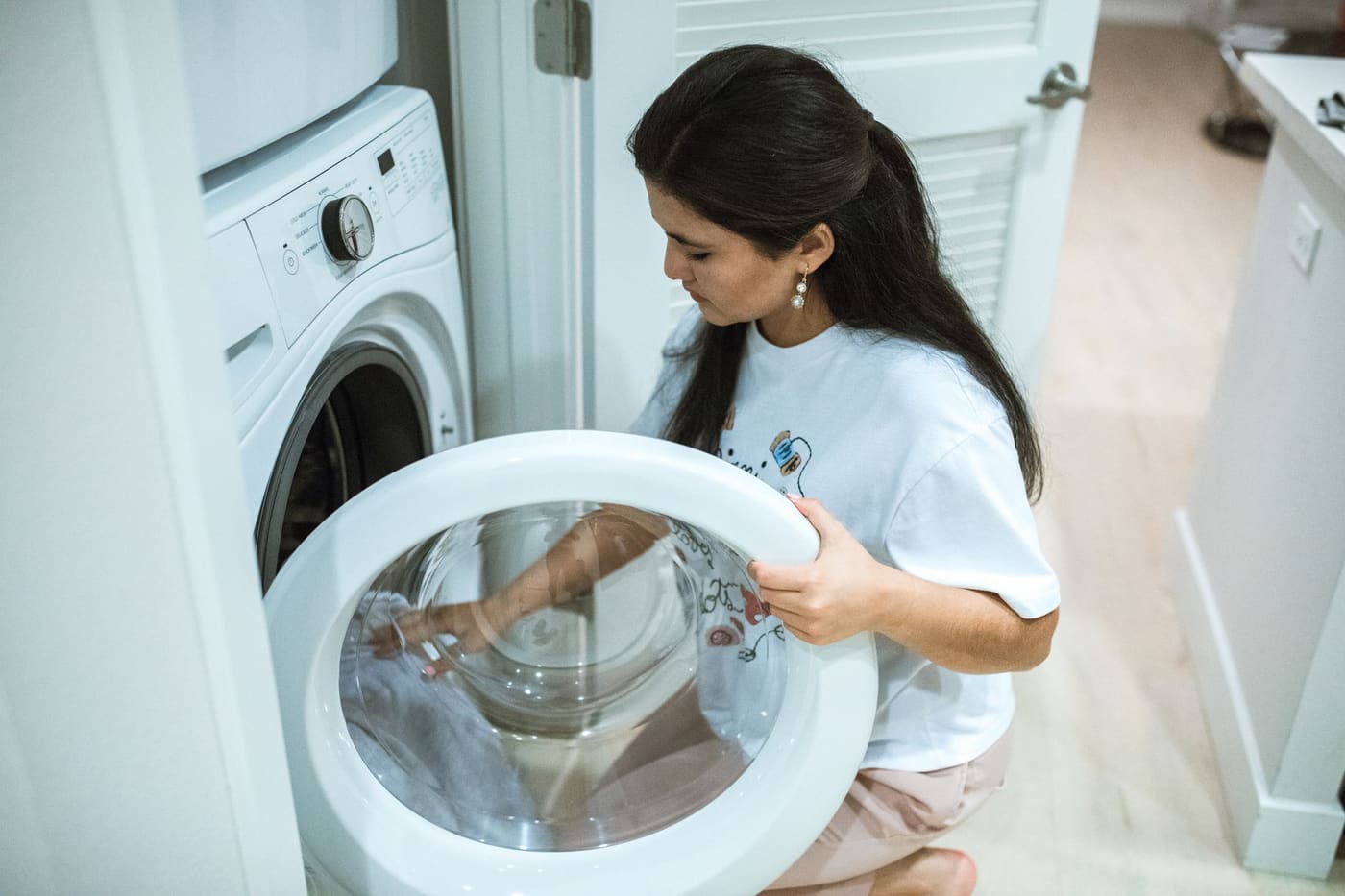
Clothes that smell bad after washing are usually carrying odor-causing bacteria and residue that the wash did not remove, or they are picking up a smell from the washer or from slow drying. The most common causes are too much detergent, an overloaded drum, a dirty or damp washer, wet clothes left sitting, and low-temperature washing of body-soiled fabric. Fix those and the smell usually goes away without any special product.
The smell often comes back because the cause repeats every wash. This guide walks through each cause, how to tell which one you have, and a reset routine to get the smell out of clothes and the machine.
Work out when the smell appears
The timing of the smell points to the cause.
| When you notice it | Likely cause |
|---|---|
| Coming out of the washer, still wet | Dirty washer, residue, or clothes left too long |
| After drying, in a dry garment | Bacteria and body oils still in the fabric |
| Only when the clothes get damp or sweaty again | Residue in synthetic fibers |
| Only on towels | Slow drying, too little hot washing, or detergent buildup |
| Musty smell from closed-up clothes | Clothes put away damp |
| Smells like smoke, chemicals, or burning | Dryer or vent problem, or product residue |
Smell the washer drum and door seal as well. A sour or mildew smell from the machine usually means the machine itself is the source.
Six common causes
Cause 1: Too much detergent
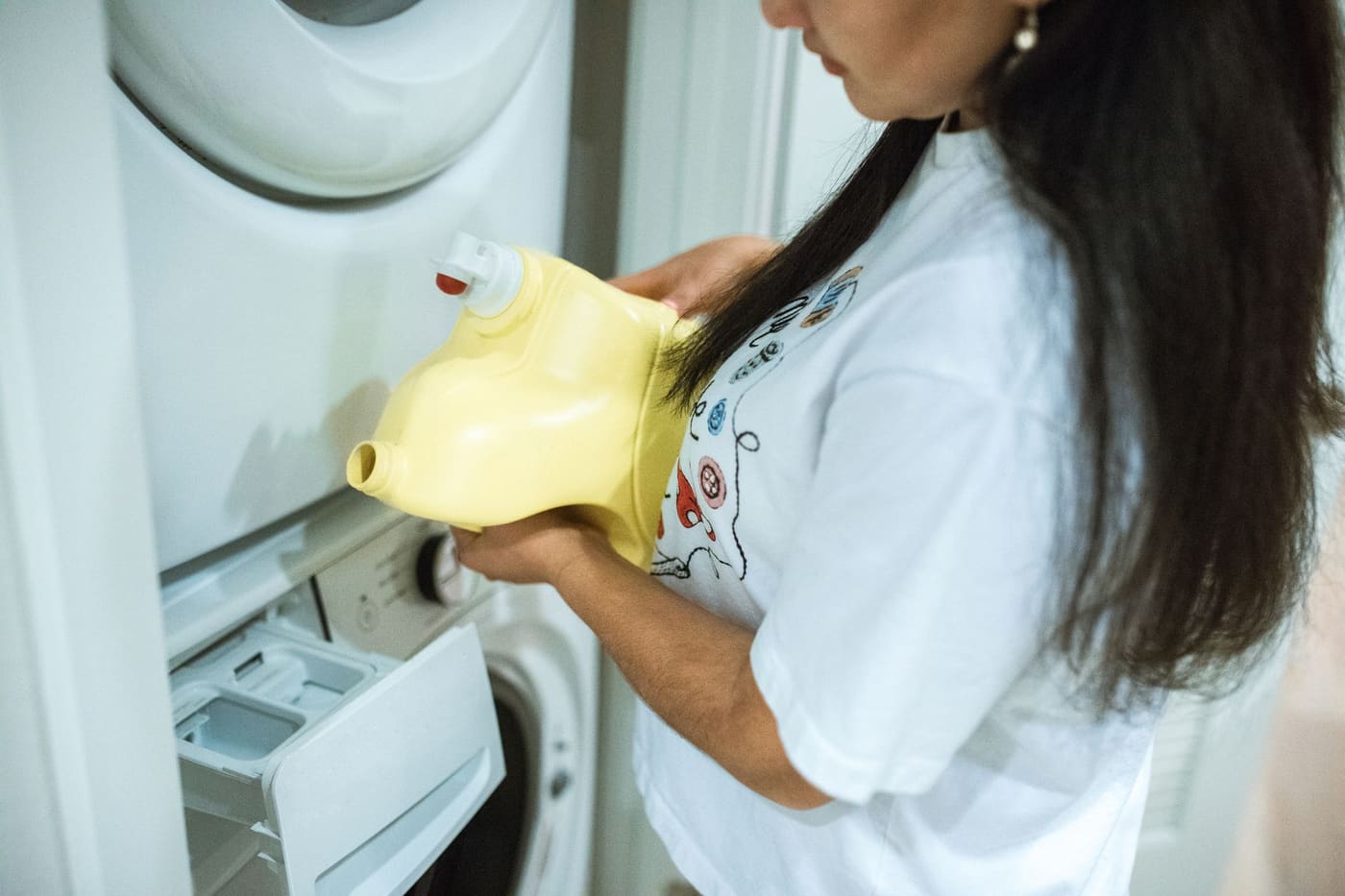
More detergent does not mean more clean. Excess soap does not rinse out fully, especially in high-efficiency (HE) machines that use little water. Leftover soap clings to the fabric and traps dirt, and bacteria feed on it. Clothes may feel stiff or slick and smell sour or soapy.
Fix:
- Use the amount shown on the cap for your load size, and use the lower line for small or lightly soiled loads.
- Use HE detergent in an HE machine.
- If clothes already have buildup, rewash them with no detergent on a hot cycle (if the fabric allows) with an extra rinse.
Cause 2: Overloading the washer
When the drum is stuffed, water and detergent cannot move through the clothes. Dirt and sweat stay in the fabric, and rinse water does not carry out the detergent. Aim for about two-thirds full, or a hand-width of space at the top of a front loader. For a top loader, keep clothes below the top agitator holes.
Large, bulky items such as comforters and towels take up much more room than they seem to. Wash them in smaller loads.
Cause 3: A dirty or damp washer
The washer drum, door seal, and detergent drawer stay wet between loads, which allows bacteria and mold to grow, especially in front loaders. Residue from detergent and fabric softener feeds that growth, and the smell transfers to clothes.
How to clean the machine
- Wipe the gasket. Pull back the rubber door seal on a front loader and wipe away hair, lint, and slime with a cloth, then dry it.
- Clean the detergent drawer. Pull it out if it is removable, rinse it with warm water, and scrub with a small brush.
- Run a cleaning cycle. Use a washer cleaner tablet, or use the tub clean cycle if the machine has one. Alternatively, some manuals allow an empty hot cycle with about 1 cup of chlorine bleach in the detergent compartment, then an extra rinse, so check yours first.
- Do not mix products. Never combine bleach with vinegar, ammonia, or acidic cleaners. The CDC warns that these combinations release toxic gases. Use one product at a time, ventilate the room, and wear gloves.
- Leave the door open. After each load, leave the door ajar and prop the lid so the drum can dry.
- Check the drain filter. A small trap at the lower front of many front loaders can hold a coin, lint, and standing water that stinks. Place a shallow pan under it and open it slowly.
More machine care steps are listed in how to keep a washer and dryer working better for longer.
Cause 4: Clothes sitting wet
Wet laundry left in the drum for more than a few hours can start to smell sour or musty, because bacteria and mildew multiply in warm, damp fabric. If you forget a load, rewash it before drying, since drying locks in the smell.
To prevent this:
- Move clothes to the dryer or rack as soon as the cycle ends.
- Use a delay-start only if you can be there when it finishes.
- Never leave wet clothes in a hamper or bag.
If the smell is already in the clothes, run them again with detergent and an oxygen bleach, and add an extra rinse. Wet laundry that sat for a day or more may need two rounds.
Cause 5: Low temperatures and body-soiled fabric
Cold water is good for most clothes, but it is less effective at removing body oils and bacteria from items that are heavily soiled or worn against the skin, such as gym clothes, socks, and towels.
For smelly items:
- Pre-soak for 30 minutes to an hour in warm water with detergent or an oxygen bleach.
- Wash on warm or hot if the label permits.
- Use an enzyme detergent, which breaks down sweat and body proteins.
- Add a second rinse.
Synthetic fabrics
Polyester and other synthetics hold on to oils and odor more than cotton. Athletic shirts may smell fine when dry but sour as soon as you sweat. Wash them promptly after wear, use enough detergent in a loosely loaded drum, and avoid fabric softener, which coats fibers and traps odor. A pre-soak in warm water with oxygen bleach helps. If the smell persists after several washes, the fabric may have a permanent buildup, and the garment may need replacing.
Cause 6: Slow or incomplete drying
Even a good wash can be undone by a poor drying process. A clogged lint trap or dryer vent, an overloaded dryer, or a dryer that does not heat properly leaves clothes damp inside seams and waistbands. That dampness produces a stale smell.
- Clean the lint screen every load.
- Check the vent duct for lint buildup about once a year. The CPSC lists clothes still damp after a normal cycle as a sign of a blocked lint screen or duct, and a blocked duct also raises fire risk.
- Do not overfill the dryer.
- Check that thick items are fully dry, including towel hems and jean pockets.
- If you hang clothes to dry, give them space and airflow, and dry them in a ventilated area.
If you smell something burning, stop the dryer, unplug it, and have it checked. Do not use it until it is checked. For gas dryers, if you smell gas, leave the house and call the gas utility from outside.
See also when to air dry clothes instead of using the dryer for tips on avoiding damp smells when drying indoors.
A reset routine for smelly laundry
If your laundry has been smelling for a while, a reset can break the cycle.
- Clean the washer. Wipe the gasket, clean the drawer, and run a tub clean cycle.
- Strip the clothes. Wash the smelly items with no more than the recommended amount of detergent and an oxygen bleach, in warm or hot water as the label allows, plus an extra rinse.
- Dry fully. Use a clean lint screen and a moderate load.
- Evaluate. If the smell is gone, adjust your routine. If it is not, repeat once before switching products.
For a long-term fix, adjust your habits: use less detergent, smaller loads, prompt drying, and an open washer door between loads. A routine that moves each load along on the same day helps. How to organize laundry so it does not pile up describes ways to keep clean and dirty laundry from sitting around.
When to call a pro
If the washer still smells after cleaning, if there is standing water, a sewer-like smell from the drain, or visible mold that keeps returning, a technician may need to inspect the drain line, pump, and hoses. A sewer smell can come from a dry drain trap or plumbing issue, and a plumber can help. Get a quote before authorizing repairs. Large areas of mold in a laundry room should be assessed and handled safely, with ventilation and protective gear, or by a professional.
Where this comes from
This guide draws on the CDC’s warnings about mixing bleach with ammonia or acids, the U.S. Consumer Product Safety Commission’s dryer lint and vent guidance, and common washer and dryer manufacturer care guidance on detergent amounts, load size and leaving the door open. The cause-by-timing table is a practical troubleshooting aid rather than a measured result. Repair costs change, so check them locally.