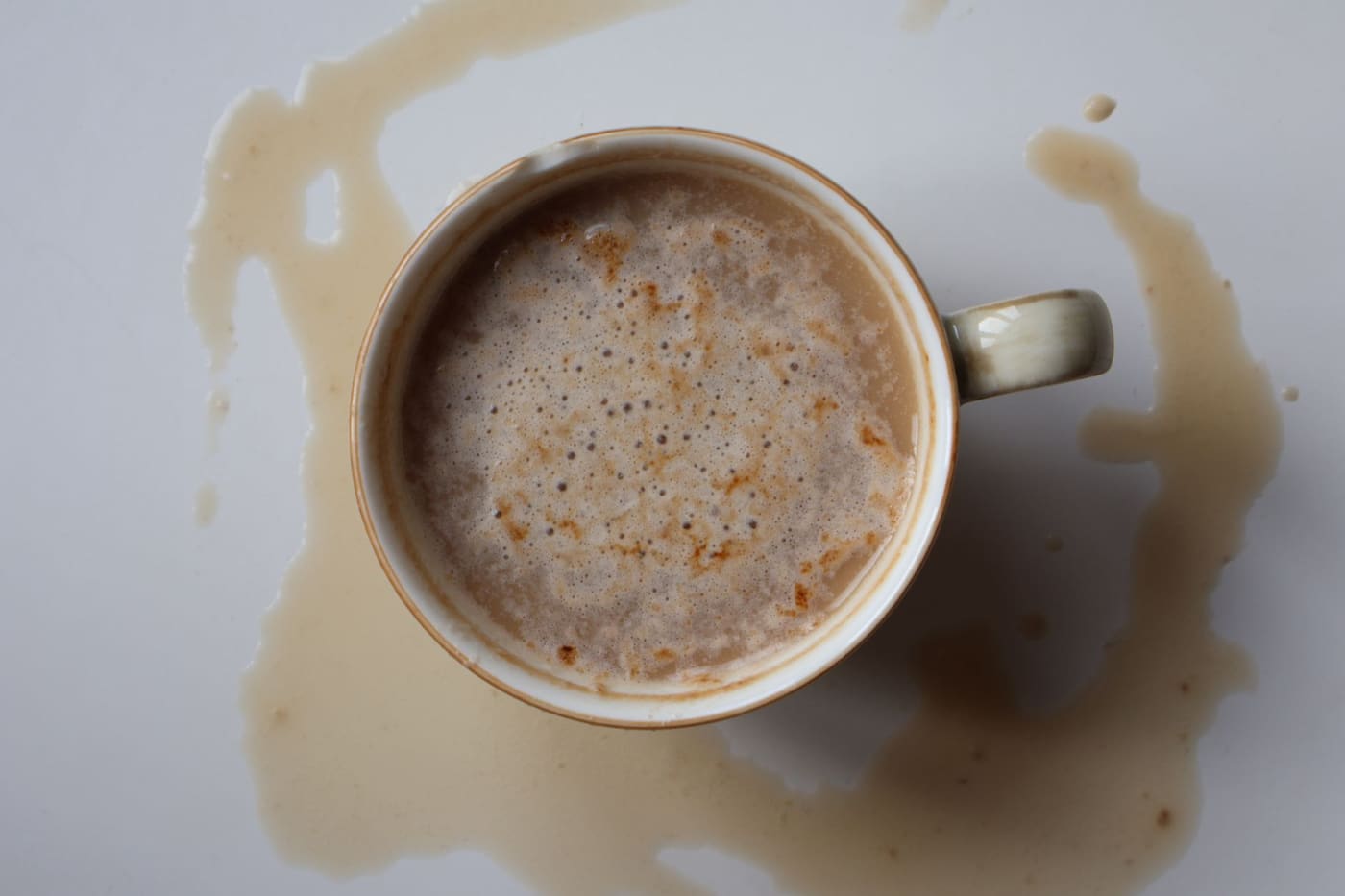
When you get a stain, blot (do not rub) to lift off excess, rinse from the back of the fabric with cold water, and keep the garment out of the dryer and away from heat until the stain is gone. Then identify what made the stain, because oily, protein, tannin, and pigment stains each need a different treatment. Acting within minutes, or at least before the garment is washed and dried, makes the difference between a stain that lifts easily and one that stays for good.
Heat is what turns many stains permanent. A hot wash or a trip through the dryer can set stains that cold water and patience would have removed. Below is a first-response routine, a guide to the main stain types, and the mistakes to avoid.
The first three minutes
- Remove solids. Scrape off food, mud, or wax with a dull edge such as a butter knife or spoon. Lift rather than smear.
- Blot liquids. Press a clean white cloth or paper towel onto the spill and hold. Rubbing pushes the stain deeper and spreads it, and it frays fibers.
- Rinse from behind. Hold the stained area under cool running water with the back of the fabric facing the water, so the stain is pushed out the way it came in rather than through the weave.
- Check the label. Before using anything stronger than water and mild soap, look at the care label for fabric and any warnings, especially for silk, wool, and “dry clean only” items.
- Keep it wet or treat it. If you cannot treat the stain right away, do not let it dry. Rinse it, or place the garment in a cold-water soak, then deal with it as soon as you can.
A stain stick or a small bottle of liquid laundry detergent in a bag or desk drawer helps when you are away from home. The stain first response checklist puts these steps on one page.
Never use heat first
Hot water, a hot dryer, and an iron can all set stains. Protein stains such as blood, egg, and sweat bond to the fibers when heated. Many dye-based stains also set in heat. Keep the garment out of the dryer until you have checked that the stain is completely gone. If a faint mark remains after washing, treat it again and air dry, then inspect it before using any heat.
Identify the stain type
Once the surface is dealt with, decide what kind of stain you have. This tells you what to use next.
| Stain type | Examples | First treatment |
|---|---|---|
| Oil or grease | Butter, salad dressing, cooking oil, makeup, lotion | Dish soap worked in with a finger or soft brush, then wash warm |
| Protein | Blood, egg, milk, sweat, grass, baby formula | Cold water soak, then enzyme detergent |
| Tannin | Coffee, tea, wine, juice, soda | Cold rinse, then detergent or oxygen bleach |
| Pigment or dye | Ink, marker, paint, mustard, turmeric | Depends on type, often an alcohol dab for ballpoint, then wash |
| Mineral or rust | Rust, hard water marks | Specific rust remover, not chlorine bleach |
Oily stains
Grease from food or body oil does not rinse out with water alone, since oil and water do not mix. Put a drop of liquid dish soap directly on the spot, rub it gently with your fingers or a soft toothbrush, and let it sit for 5 to 10 minutes. Then wash in the warmest water the label permits. For a fresh oil spot on a dry garment, a sprinkle of baking soda or cornstarch left for 15 to 30 minutes can absorb some of the oil before you treat it.
Protein stains
Blood, sweat, milk, and egg need cold water. Soak the garment for 30 minutes or longer in cold water, then use a laundry detergent that contains enzymes. Enzymes break proteins down. Hot water cooks the proteins into the fabric.
Tannin stains
Coffee, tea, wine, and juice are plant-based pigments. Flush with cool water, then work in laundry detergent and wash. For a stubborn stain on colorfast white or light fabric, an oxygen-based bleach powder soaked in warm water often helps. Test it first on a hidden seam.
Ink and other dye-based stains
Ballpoint ink often responds to rubbing alcohol, applied by dabbing from the back onto a clean cloth below the stain so that it transfers rather than spreads. Permanent marker and paint are harder. Check the product or label directions, and for valuable items consider a professional cleaner.
Match the product to the fabric
The method that works on cotton can damage another fabric.
- Cotton, polyester, and blends usually handle detergent, dish soap, and oxygen bleach well.
- Silk and wool are protein fibers, and enzyme detergents and chlorine bleach can damage them. Use cold water and a mild detergent made for delicates, or send them to a dry cleaner.
- Dry clean only items are best handled by a professional. Blot gently and take the garment in as soon as you can, pointing out the stain and its cause.
- Colored fabrics should be tested for colorfastness. Dab a hidden spot with the product and check a white cloth for dye transfer.
- Items with prints or special finishes may be damaged by solvents and scrubbing.
Chlorine bleach is for white, bleach-safe cotton and some synthetics only, never for wool, silk, or spandex. Never mix it with ammonia, vinegar, or any other cleaner. The CDC warns that bleach combined with ammonia or acids releases toxic gases. When using any chemical, ventilate the room and wear gloves, and keep products away from children and pets.
Wash, then check before drying
After pre-treating, let the product sit for the time its label gives, since detergents, stain removers and oxygen bleach each differ. Then wash on the warmest setting the fabric allows.
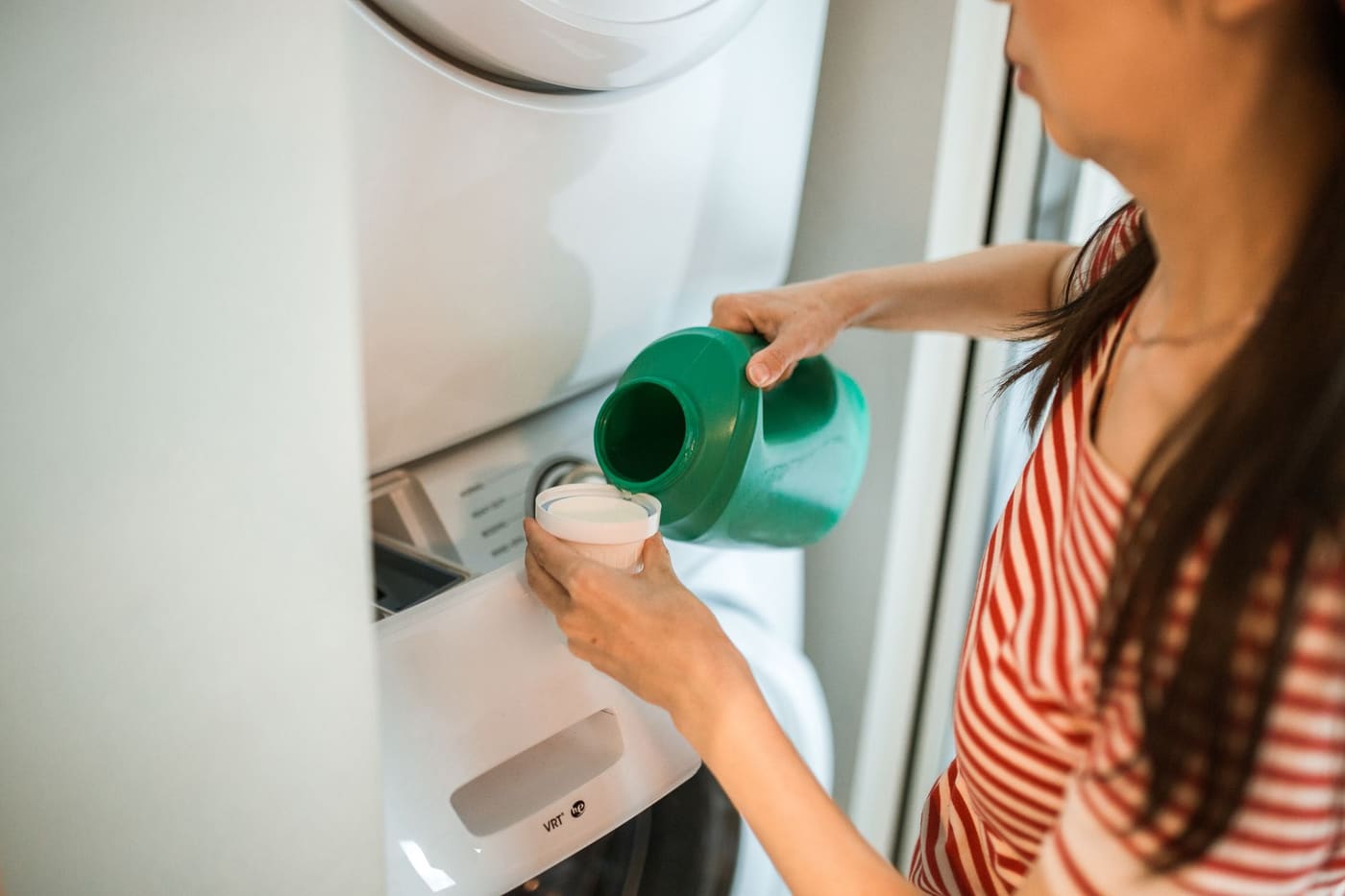
When the cycle ends, look at the stain in good light while the garment is still wet. If it is gone, dry as usual. If it is still visible, repeat the treatment and rewash. Drying an item with a visible stain is the most common way a removable stain becomes permanent.
Mistakes that make stains worse
- Rubbing hard. This spreads the stain and damages fibers.
- Using hot water first. This sets many stains.
- Reaching for folk remedies first. Some people swear by salt or club soda, but quick rinsing and proper detergent are the safer starting point, and delay lets the stain dry.
- Mixing chemicals. Never combine bleach with ammonia or acids.
- Skipping the label. Check care and fiber content before using a stronger product.
- Waiting. A fresh stain is easier to remove than one that has dried for days. Even an old stain can often be improved, but it takes more repetitions.
When to take it to a professional
Consider a dry cleaner if the item is silk, leather, suede, or an expensive structured garment, if the stain is a dye or oil on a delicate fabric, or if your first attempt did not work. Tell them what caused the stain and what you have already tried. Ask for a price before they start.
Keep a small kit
A basic stain kit is inexpensive and covers most situations:
- Liquid dish soap for grease
- Enzyme laundry detergent or stain remover
- Oxygen bleach powder
- White cloths or paper towels
- A soft toothbrush
- Rubbing alcohol for ink
If a stain keeps coming back, or your wash is leaving marks, why clothes still smell bad after washing covers machine and residue issues that can also cause discoloration. Frequent washing and heat wear out fabric too, so see how to make clothes last longer in the wash, and for delicate items check what clothes should never go in the dryer.
Where this comes from
This guide is based on widely repeated textile-care practice (blot, rinse from the back, avoid heat, match treatment to stain type and fiber), garment care-label conventions, and the CDC’s warnings about mixing bleach with ammonia or acids. Specific products and dwell times vary, so the product label and the garment’s care label take precedence. Prices change, so check supplies locally.